
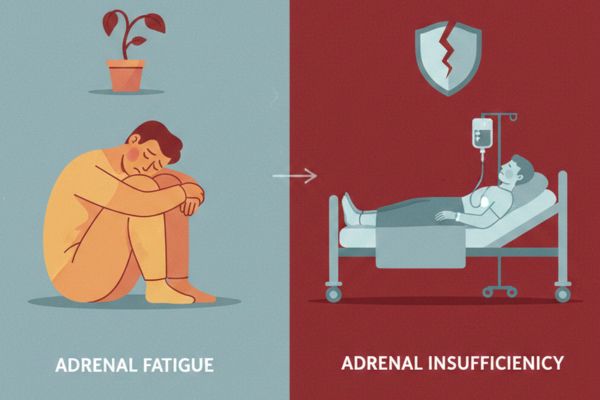
One debate that has consistently caused a rift between functional health communities and conventional medicine is the distinction between adrenal fatigue vs adrenal insufficiency. Due to the hectic pace of modern life, we are often forced to be constantly occupied and move rapidly.
Most people would rather be busy and active than not; therefore, this is not an issue. But what if it does become an issue? What if people are so busy all the time that they just appear to be exhausted and worn out always?
In this write-up, we will look at what is adrenal insufficiency, its complications, and the adrenal fatigue vs adrenal insufficiency.
What is Adrenal Fatigue?
Adrenal fatigue is a condition resulting from prolonged stress exposure. Most of its symptoms are quite like those of adrenal insufficiency (we will talk about this later). At the beginning, some people might not even feel worn out; instead, strange cravings for salt, sugar, and carbs will arise. They will gradually begin to feel lethargic and unmotivated during the day as time goes on and the hormones get increasingly out of balance, followed by a surge of energy in the evening and at night.
Symptoms of Adrenal Fatigue
Exhaustion, bodily pains, insomnia, anxiety, or digestive issues are thought to be signs of adrenal fatigue. Additionally, it is stated that a person can want sweets and salt and require stimulants like caffeine to keep active throughout the day. These are symptoms that are not particular to any one condition. These symptoms might just be present in someone who is always busy.
What is Adrenal Insufficiency?
When the adrenal glands are unable to generate enough cortisol to maintain the balance (homeostasis) of blood pressure, electrolytes, and metabolic energy, this condition is known as adrenal insufficiency.
Since cortisol is necessary to sustain many fundamental bodily processes, adrenal insufficiency poses a threat to human existence. Most people with adrenal insufficiency require lifelong cortisol replacement therapy. Adrenal insufficiency’s non-specific symptoms, including nausea, exhaustion, and discomfort, are frequently confused with other illnesses.

Genetic abnormalities, autoimmune diseases, infections, head injuries, and steroid therapy for other ailments, including cancer and asthma, are among the over sixty causes of adrenal insufficiency. Adrenal insufficiency is categorized into three types.
Primary Adrenal Insufficiency
This kind of adrenal insufficiency, also referred to as Addison’s disease, is caused by long-term adrenal gland injury. They are no longer able to generate enough cortisol to combat stress or increase vitality. The body then experiences a significant hormone deficiency, which results in an imbalance and may affect the thyroid and other parts of the body.
Secondary adrenal insufficiency
This comes from the pituitary gland. Head injuries, Sheehan’s syndrome (excessive blood loss following delivery), and empty Sella are a few examples of secondary adrenal insufficiency. Another name for it is hypopituitarism. Multiple hormone shortages frequently complicate secondary adrenal insufficiency because the pituitary communicates with both the thyroid and adrenal glands.
To better understand primary vs secondary adrenal insufficiency, it’s important to note that primary adrenal insufficiency originates from direct damage to the adrenal glands themselves, while secondary adrenal insufficiency results from impaired signaling by the pituitary gland, leading to reduced cortisol production despite structurally normal adrenal glands.
Tertiary Adrenal Insufficiency
This kind of adrenal insufficiency happens when the hypothalamus is unable to generate enough corticotropin. This results in pituitary gland malfunction, which reduces the quantity of ACTH secreted. Consequently, the adrenal glands are unable to generate cortisol in the blood.
Adrenal Insufficiency Complications
Adrenal crisis is the most dangerous side effect of insufficient adrenal glands. An adrenal crisis can be fatal if left untreated. During periods of physical stress, such as illness, severe injury, or surgery, your body requires a lot more cortisol than usual. These periods of extreme cortisol deficiency can result in potentially severe low blood pressure, high blood potassium, low blood glucose, and low blood sodium.
Adrenal Fatigue vs Adrenal Insufficiency: What’s the Difference
Adrenal fatigue is the progressive weakening of the adrenal glands because of stress, whereas adrenal insufficiency is the depletion of cortisol levels because of adrenal injury. Since persistent stress is the primary cause of adrenal fatigue, its symptoms are less evident. There are several chronic illnesses that can result in adrenal insufficiency, including adrenal fatigue.
Additionally, adrenal fatigue patients still have functioning adrenal glands that are in the process of getting compromised, but adrenal insufficiency is a more dangerous diagnosis since it typically means the adrenal glands are already destroyed.
The symptoms of adrenal fatigue are not the same as those of adrenal insufficiency. Confusion, dehydration, or weight loss are some of the symptoms. Weakness, exhaustion, lightheadedness, nausea, vomiting, or stomach discomfort are among the symptoms that patients may report. To identify adrenal insufficiency, many blood tests are required. Steroid-based drugs that replenish the missing cortisol hormone are an easy way to treat it.
Conclusion
There will always be constant debate on adrenal fatigue vs adrenal insufficiency. Life may be difficult, particularly these days, but it does not have to negatively impact our bodies, health, or quality of life. Any form of chronic stress gradually wears down the body and, if left untreated, may even be fatal. Being aware of this is half the fight. Give yourself the information you need to take action to safeguard your health and well-being.