
Shedding light on this critical unmet in survivors with HO through the Patient Registry
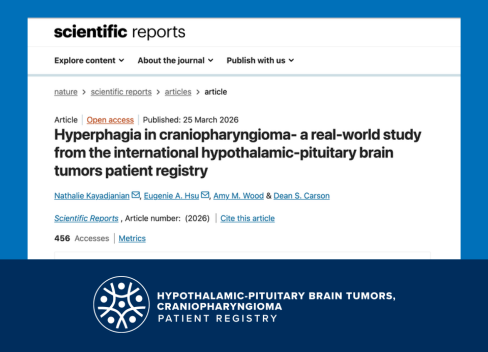
Hyperphagia—defined as excessive hunger, difficulty feeling full, and constant food-seeking—affects more than half of persons with craniopharyngioma, especially those diagnosed with hypothalamic obesity (HO). Our previous Caregiver Impact Study showed that hyperphagia greatly lowered survivors’ quality of life of and places significant strain on caregivers.
In this new study, we aimed to better understand the specific characteristics of hyperphagia in CP, and to determine whether it differs between those with and without HO. This knowledge is important for developing effective treatments that truly address this serious and unmet need.
The objectives of this study were to:
- Measure the severity of hyperphagia in CP using assessment tools that have proven effective in other conditions.
- Compare eating behaviors in craniopharyngioma survivors with and without HO
- Characterize hyperphagia and how it manifests in CP survivors.
Key Findings
Survivors with HO face additional health challenges
- They face significantly more health challenges than survivors without HO. Most challenges are linked to hypothalamic dysfunction—known as hypothalamic syndrome—including fatigue, disrupted body clock, and emotional, cognitive, and behavioral difficulties. These findings show that HO is more than just obesity and should be seen as part of the broader hypothalamic syndrome.
Survivors with HO have worse eating behaviors
- They develop more intense hunger after tumor treatment compared to survivors without HO
- They experience higher levels of hunger, feel less satiated, and have shorter meal duration.
- They constantly think about food and are consumed by food thoughts
- In some cases, they may eat non-food items
- They have stronger emotional and behavioral responses to hunger
Caregivers of survivors with HO use food control strategies
- Most caregivers closely supervise child at home, avoid places where food is present, alert others about their child’s food issues, and check their child’s belongings or bedroom for hidden food.
Survivors with HO have hyperphagia severity scores similar to those seen in Prader-Willi syndrome
- The average HQ-CT score for survivors with HO matched scores found in individuals with Prader-Willi syndrome, while survivors without HO had scores similar to typically developing children.
A Simple but Powerful Tool to Identify Hyperphagia
- Identifying hyperphagia can be difficult because these behaviors are complex and not easily seen during a doctor’s visit, and there can be stigma around eating and food-seeking behaviors. Our study found that simply asking, “How much of the day are you preoccupied with thoughts about food?” on a scale from 0 (none of the time) to 10 (all the time), may be a straightforward and effective way to screen for hyperphagia in clinical settings. This could help doctors spot the condition more easily during routine visits.
Implication for Care Management and Therapeutic Development
Hyperphagia is a critical unmet need that is complex and often difficult to diagnose in a short medical appointment or in clinical trials. This study:
- Highlights practical tools to help diagnose hyperphagia
- Explores assessment tools that can measure hyperphagia and be used to test how well new drugs work
- Supports more accurate diagnosis and improved patient care
Ultimately, these findings bring us closer to treatments that truly address the needs of people living with CP.
Conclusion
This study shows that eating behaviors in CP range from normal to severe hyperphagia, especially in survivors with HO. This underscores how serious hyperphagia can be in this group and highlights the urgent need to develop therapies targeting hyperphagia.
Hyperphagia in craniopharyngioma- a real-world study from the international hypothalamic-pituitary brain tumors patient registry
Access the Full PublicationRole of the Patient Registry
This study was made possible through participation in the Hypothalamic–Pituitary Brain Tumors Patient Registry.
As a research infrastructure, the registry enables:
- Longitudinal data collection
- Real-world evidence generation
- Identification of unmet clinical needs
Participation in the registry contributes to a growing evidence base that supports improved understanding of CP and accelerates research progress.
Join the RegistryAdvancing Research
Ongoing participation in the patient registry remains essential to expanding the evidence base, refining research priorities, and accelerating the development of targeted therapies.
Continued contribution of patient-reported data will play a central role in improving outcomes for individuals living with craniopharyngioma.
Support Our Research Work