
Información esencial para ayudarte a reconocer y responder ante una crisis suprarrenal.
Para las personas con insuficiencia suprarrenal, un La crisis suprarrenal es una emergencia médica que pone en riesgo la vida. Esto puede ocurrir cuando el cuerpo no tiene suficiente cortisol para responder a una enfermedad, una lesión, vómitos, una cirugía u otro tipo de estrés físico significativo.
Conocer los síntomas de una crisis suprarrenal y saber cómo administrar una inyección de hidrocortisona de emergencia puede salvar una vida.
¿Sospechas que se trata de una crisis suprarrenal?
Aplique inmediatamente la inyección de hidrocortisona de emergencia que se le haya recetado y llame al 911.
Informe al personal de emergencia:
“Esta persona padece insuficiencia suprarrenal, depende de esteroides y podría estar sufriendo una crisis suprarrenal”.”
No demores el tratamiento de emergencia mientras esperas a ver si los síntomas mejoran.
Posibles signos de crisis suprarrenal
Los síntomas pueden incluir:
- Debilidad grave o empeoramiento repentino de los síntomas
- Náuseas o vómitos repetidos
- Diarrea
- Dolor abdominal intenso u otro tipo de dolor
- Mareos, desmayos o presión arterial muy baja
- Confusión, somnolencia inusual o dificultad para responder
- Deshidratación
- Fiebre, escalofríos o enfermedad grave
- Desmayo o pérdida del conocimiento
- Hipoglucemia, especialmente en niños
Los síntomas pueden variar de una persona a otra. Siga el plan de tratamiento de emergencia específico de cada persona siempre que se sospeche una crisis suprarrenal.
Cómo administrar una inyección de emergencia de Solu-Cortef®
Solu-Cortef® es una forma inyectable de hidrocortisona que se puede recetar a personas con insuficiencia suprarrenal para que la usen en caso de emergencia.
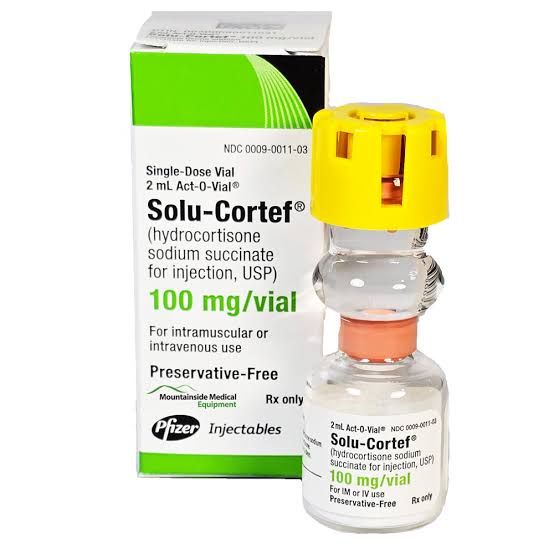
Siga siempre la dosis recetada por el endocrinólogo o el profesional de la salud del paciente. Las dosis de emergencia pueden variar según la edad, el peso y el plan de tratamiento individual.
Estas instrucciones describen el Solu-Cortef ACT-O-VIAL® sistema. Otros productos con hidrocortisona pueden requerir pasos de preparación diferentes.
Lo que vas a necesitar
Tu kit de emergencia puede contener:
- Solu-Cortef ACT-O-VIAL
- Jeringa
- Aguja adecuada
- Toallita con alcohol
- Instrucciones de dosificación de emergencia para el paciente
- Identificación médica o información de emergencia sobre esteroides
Revisa tu kit con regularidad y reemplaza los suministros vencidos.
Preparación del ACT-O-VIAL
1. Activa el frasco.
Presiona con firmeza el activador de plástico que se encuentra en la parte superior del frasco. Al hacerlo, se libera el líquido en el compartimento que contiene el medicamento en polvo.
2. Mezcla el medicamento.
Agita suavemente el frasco hasta que el polvo se haya disuelto por completo.
3. Retira la lengüeta de plástico.
Retira la cubierta de plástico que se encuentra en el centro del tapón de hule.
4. Limpia el tapón.
Limpia el tapón de hule con una toallita con alcohol, si tienes una a la mano.
5. Conecta la aguja y la jeringa.
Retira la cubierta de la aguja e inserta la aguja directamente a través del centro del tapón de hule.
6. Extraiga la dosis indicada.
Voltea el frasco boca abajo sin sacar la aguja del frasco. Tira hacia atrás del émbolo de la jeringa y extrae la cantidad indicada en el plan de emergencia del paciente.
Antes de administrar la inyección, asegúrate de seguir la dosis recetada al paciente.
Cómo administrar una inyección intramuscular
En caso de que el paciente o su cuidador deban administrar el medicamento de manera de emergencia, Solu-Cortef puede inyectarse en un músculo grande. La información para pacientes de Pfizer indica que el muslo es el lugar preferido para una inyección intramuscular de emergencia.
1. Deja al descubierto la parte exterior del muslo.
2. Limpia el lugar de la inyección si tienes una toallita con alcohol.
No pospongas una inyección que se necesite con urgencia si no hay productos de limpieza disponibles.
3. Sostenga la jeringa con firmeza.
4. Inserta la aguja en el músculo del muslo formando un ángulo de aproximadamente 90 grados.
5. Empuje el émbolo hacia abajo de manera constante hasta que se haya inyectado la dosis prescrita.
6. Retira la aguja y aplica una ligera presión en el lugar de la inyección.
Deshazte de la aguja y la jeringa de manera segura siempre que sea posible.
Después de administrar Solu-Cortef
Llama al 911 o busca atención médica de emergencia de inmediato.
Una inyección de emergencia de hidrocortisona es el primer paso para tratar una crisis suprarrenal; esto sí no sustituir la evaluación y el tratamiento en un servicio de urgencias.
Quédate con la persona hasta que llegue la ayuda.
Trae, si es posible:
- El kit de medicamentos de emergencia del paciente
- Lista de medicamentos
- Tarjeta de emergencia para esteroides o información de alerta médica
- Plan de acción para la insuficiencia suprarrenal
- Información de contacto del endocrinólogo
Informe al personal de emergencia que el paciente está dependientes de esteroides y con riesgo de crisis suprarrenal.
Otros recursos: Cómo administrar una inyección de hidrocortisona de emergencia
Ver y practicar el procedimiento antes de que se presente una emergencia puede ayudar a los pacientes, a los cuidadores, a los familiares, al personal escolar y a otras personas a sentirse más preparados.
Pfizer: Cómo usar el Solu-Cortef ACT-O-VIAL
Instrucciones oficiales del fabricante para preparar el sistema ACT-O-VIAL.
Ver las instrucciones para el paciente "
Adrenal Insufficiency United: Preparación para emergencias
Educación para pacientes y cuidadores sobre cómo prepararse para una crisis suprarrenal y la administración de emergencia de Solu-Cortef.
Grupo de autoayuda para la enfermedad de Addison: Inyección de hidrocortisona de emergencia
Demostración de cómo preparar y administrar una inyección de emergencia de hidrocortisona utilizando un ACT-O-VIAL.
Prepara un kit de emergencia para una crisis suprarrenal
Las personas con insuficiencia suprarrenal deben consultar con su proveedor de atención médica para tener un kit de emergencia.
Considera incluir:
- Hidrocortisona de emergencia recetada
- Jeringas y agujas recomendadas por su proveedor de atención médica
- Toallitas con alcohol
- Instrucciones escritas sobre la dosificación en casos de emergencia
- Tarjeta de emergencia para esteroides o identificación de insuficiencia suprarrenal
- Pulsera o collar de alerta médica
- Lista actual de medicamentos
- Información de contacto en caso de emergencia
- Información de contacto del endocrinólogo
Guarda el kit en un lugar de fácil acceso y asegúrate de que los miembros de tu familia, los cuidadores, los maestros, los entrenadores y otras personas pertinentes sepan dónde está y cómo usarlo.
Revisa con regularidad las fechas de vencimiento de los medicamentos y las existencias.
Recursos adicionales sobre la insuficiencia suprarrenal
Información para pacientes e información clínica sobre la insuficiencia suprarrenal, la crisis suprarrenal y la preparación para emergencias.
Información detallada sobre la crisis suprarrenal, orientación sobre las inyecciones de hidrocortisona, normas para los días de enfermedad y recursos sobre planes de acción para la insuficiencia suprarrenal.
Insuficiencia suprarrenal Unidos
Ofrece información para pacientes, recursos y apoyo.
Prepárate antes de una emergencia
El mejor momento para aprender a administrar una inyección de emergencia es antes de que sea necesario.
Pídele a tu equipo de endocrinología que:
- Proporcione un plan por escrito para casos de crisis suprarrenal
- Especifique exactamente cuándo se debe administrar una inyección de emergencia
- Anota la dosis correcta de hidrocortisona para casos de emergencia
- Demuestra cómo preparar y administrar la inyección
- Capacitar a los cuidadores o a los familiares
- Explica las instrucciones sobre los días de enfermedad o la dosificación en caso de estrés
- Ayudarte a obtener una identificación médica
Considera practicar periódicamente con tu equipo de atención médica para que tanto tú como tus cuidadores se sientan cómodos con el proceso.
Aviso médico importante
Este recurso se ofrece con fines educativos y no sustituye el asesoramiento médico personalizado, el diagnóstico ni el tratamiento.
Las dosis de hidrocortisona de emergencia y los planes de tratamiento varían, especialmente en el caso de los bebés y los niños. Los pacientes y sus cuidadores deben seguir el plan de emergencia y la dosis recetada por su endocrinólogo u otro profesional de la salud calificado.
La crisis suprarrenal es una emergencia médica. Si se sospecha que se trata de una crisis suprarrenal, administra el medicamento de emergencia recetado de acuerdo con el plan de tratamiento del paciente y busca atención médica de emergencia de inmediato.