
Essential information to help you recognize and respond to an adrenal crisis.
For people with adrenal insufficiency, an adrenal crisis is a life-threatening medical emergency. It can happen when the body does not have enough cortisol to respond to illness, injury, vomiting, surgery, or another significant physical stress.
Knowing the signs of adrenal crisis and knowing how to give an emergency hydrocortisone injection can save a life.
Suspect an adrenal crisis?
Give the prescribed emergency hydrocortisone injection immediately and call 911.
Tell emergency responders:
“This person has adrenal insufficiency, is steroid-dependent, and may be having an adrenal crisis.”
Do not delay emergency treatment while waiting to see whether symptoms improve.
Possible signs of adrenal crisis
Symptoms may include:
- Severe weakness or sudden worsening of symptoms
- Nausea or repeated vomiting
- Diarrhea
- Severe abdominal or other pain
- Dizziness, fainting, or very low blood pressure
- Confusion, unusual sleepiness, or difficulty responding
- Dehydration
- Fever, chills, or severe illness
- Collapse or loss of consciousness
- Low blood sugar, particularly in children
Symptoms can vary from person to person. Follow the individual’s emergency treatment plan whenever adrenal crisis is suspected.
How to Give an Emergency Solu-Cortef® Injection
Solu-Cortef® is an injectable form of hydrocortisone that may be prescribed for people with adrenal insufficiency to use during an emergency.
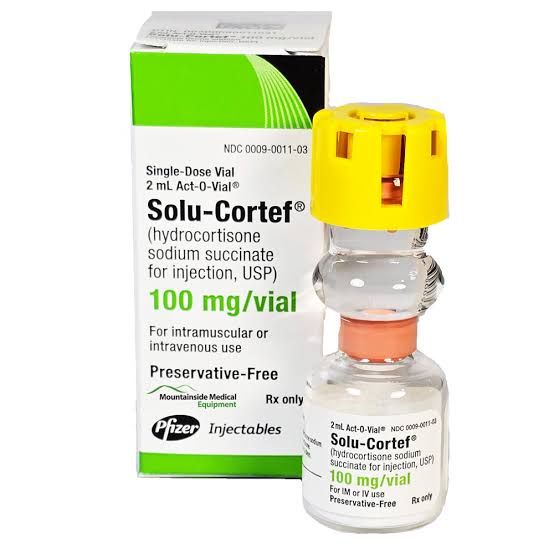
Always follow the dose prescribed by the patient’s endocrinologist or healthcare provider. Emergency doses can differ by age, size, and individual treatment plan.
These instructions describe the Solu-Cortef ACT-O-VIAL® system. Other hydrocortisone products may require different preparation steps.
What you will need
Your emergency kit may contain:
- Solu-Cortef ACT-O-VIAL
- Syringe
- Appropriate needle
- Alcohol wipe
- The patient’s emergency dosing instructions
- Medical identification or steroid emergency information
Check your kit regularly and replace expired supplies.
Preparing the ACT-O-VIAL
1. Activate the vial.
Press firmly down on the plastic activator at the top of the vial. This releases the liquid into the compartment containing the medication powder.
2. Mix the medication.
Gently swirl or agitate the vial until the powder has completely dissolved.
3. Remove the plastic tab.
Remove the plastic covering over the center of the rubber stopper.
4. Clean the stopper.
Wipe the rubber stopper with an alcohol wipe, when available.
5. Attach the needle and syringe.
Remove the needle cover and insert the needle straight through the center of the rubber stopper.
6. Withdraw the prescribed dose.
Turn the vial upside down while keeping the needle inside the vial. Pull back on the syringe plunger and withdraw the amount prescribed in the patient’s emergency plan.
Before giving the injection, make sure you are following the patient’s prescribed dose.
Giving the intramuscular injection
For emergency self- or caregiver administration, Solu-Cortef may be given into a large muscle. Pfizer’s patient information identifies the thigh as the preferred location for an emergency intramuscular injection.
1. Expose the outer thigh.
2. Clean the injection site if an alcohol wipe is available.
Do not delay an urgently needed injection if cleaning supplies are unavailable.
3. Hold the syringe firmly.
4. Insert the needle into the thigh muscle at approximately a 90-degree angle.
5. Push the plunger down steadily until the prescribed medication has been injected.
6. Remove the needle and apply gentle pressure to the injection site.
Dispose of the needle and syringe safely when possible.
After Giving Solu-Cortef
Call 911 or seek emergency medical care immediately.
An emergency hydrocortisone injection is the first step in treating an adrenal crisis—it does not replace evaluation and treatment in an emergency department.
Stay with the person while help is coming.
Bring, when available:
- The patient’s emergency medication kit
- Medication list
- Steroid emergency card or medical alert information
- Adrenal insufficiency action plan
- Endocrinologist’s contact information
Tell emergency personnel that the patient is steroid-dependent and at risk for adrenal crisis.
Other Resources: How to Give an Emergency Hydrocortisone Injection
Watching and practicing the procedure before an emergency can help patients, caregivers, family members, school personnel, and others feel more prepared.
Pfizer: How to Use the Solu-Cortef ACT-O-VIAL
Official instructions from the manufacturer for preparing the ACT-O-VIAL system.
Adrenal Insufficiency United: Emergency Preparedness
Patient and caregiver education about adrenal crisis preparedness and emergency Solu-Cortef administration.
Addison’s Disease Self-Help Group: Emergency Hydrocortisone Injection
A demonstration of preparing and administering a hydrocortisone emergency injection using an ACT-O-VIAL.
Build an Adrenal Crisis Emergency Kit
People with adrenal insufficiency should work with their healthcare provider to maintain an emergency kit.
Consider including:
- Prescribed emergency hydrocortisone
- Syringes and needles recommended by your healthcare provider
- Alcohol wipes
- Written emergency dosing instructions
- Steroid emergency card or adrenal insufficiency identification
- Medical alert bracelet or necklace
- Current medication list
- Emergency contact information
- Endocrinologist’s contact information
Keep the kit somewhere that is easy to reach, and make sure family members, caregivers, teachers, coaches, and other appropriate people know where it is and how to use it.
Check medication expiration dates and supplies regularly.
Additional Adrenal Insufficiency Resources
Patient education and clinical information about adrenal insufficiency, adrenal crisis, and emergency preparedness.
Detailed adrenal crisis information, hydrocortisone injection guidance, sick-day rules, and adrenal insufficiency action-plan resources.
Insuficiencia suprarrenal Unidos
Provides patient education, resources and advocacy.
Prepare Before an Emergency
The best time to learn how to give an emergency injection is before it is needed.
Ask your endocrinology team to:
- Provide a written adrenal crisis plan
- Specify exactly when an emergency injection should be given
- Write down the correct emergency hydrocortisone dose
- Demonstrate how to prepare and administer the injection
- Train caregivers or family members
- Explain sick-day or stress-dosing instructions
- Help you obtain medical identification
Consider practicing with your healthcare team periodically so that you and your caregivers remain comfortable with the process.
Important Medical Disclaimer
This resource is provided for educational purposes and is not a substitute for individualized medical advice, diagnosis, or treatment.
Emergency hydrocortisone doses and treatment plans vary, particularly for infants and children. Patients and caregivers should follow the emergency plan and dose prescribed by their endocrinologist or other qualified healthcare professional.
Adrenal crisis is a medical emergency. When adrenal crisis is suspected, administer prescribed emergency medication according to the patient’s treatment plan and seek emergency medical care immediately.