
Coming together to advance understanding of MC4R pathway diseases and acquired hypothalamic obesity.
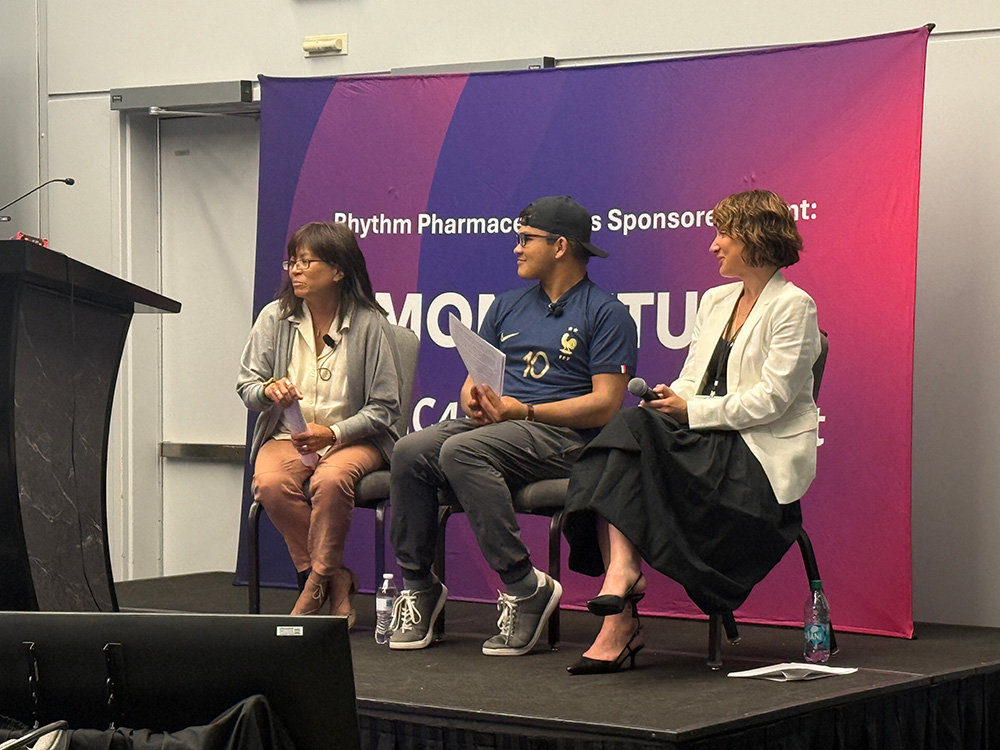
Bonnie (Ian’s mom), Ian (cranio survivor with aHO) and Kat (mom of Reid, living with BBS) share their stories at Momentum: the MC4r Pathway Summit.
On June 12, 2026, clinicians, researchers, industry leaders, patients, and caregivers gathered in Chicago for the first-ever MOMENTUM: the MC4R Pathway Summit, hosted by Rhythm Pharmaceuticals ahead of the Endocrine Society’s annual meeting (ENDO 2026).
Despite weather-related travel disruptions, participants joined both in person and virtually for a day dedicated to advancing understanding of MC4R pathway diseases and acquired hypothalamic obesity (aHO)—conditions that profoundly impact many survivors of hypothalamic-pituitary brain tumors.
For those of us in the hypothalamic syndrome community, the summit felt like something more than a scientific meeting. It truly felt like momentum.
The summit was chaired by Dr. Odelia Cooper of Cedars-Sinai Medical Center and Dr. Brooke Sweeney of Children’s Mercy Kansas City, who brought together experts from across disciplines to explore the complex challenges associated with MC4R pathway impairment and hypothalamic dysfunction.
Topics ranged from recognizing and diagnosing acquired hypothalamic obesity in clinical practice to the neurocognitive manifestations of MC4R pathway diseases. Speakers also addressed the realities of hyperphagia, food noise, obesity management, and the lived experiences of patients and families navigating rare forms of obesity.
Several themes emerged throughout the day.
The Challenges of Diagnosis
One recurring discussion centered on how little is still understood about diagnosing acquired hypothalamic obesity, particularly in adults. For many survivors of craniopharyngioma and other hypothalamic-pituitary tumors, obesity may already be present before treatment, making it difficult to distinguish between common obesity and obesity driven by hypothalamic injury.
As awareness grows, clinicians are increasingly recognizing the need for better diagnostic criteria, improved screening tools, and greater education across healthcare settings.
Hypothalamic Syndrome Is More Than Weight Gain
The summit reinforced an important reality that patients and caregivers have long known: hypothalamic syndrome is not simply a weight-management issue.
Presentations highlighted the wide range of symptoms that can affect quality of life, including:
- Hyperphagia and persistent hunger
- Metabolic dysfunction
- Memory and cognitive challenges
- Executive functioning difficulties
- Daytime fatigue
- Sleep disturbances
These symptoms often interact with one another, creating a cycle that can make traditional lifestyle interventions particularly difficult and frustrating for patients and families.
Addressing Stigma and Shame
Another powerful discussion focused on the emotional burden carried by many patients and caregivers.
Speakers acknowledged the guilt and shame that parents often experience when their child presents with obesity in a clinical setting. Families frequently report feeling judged or blamed despite facing a biologically driven condition that cannot be managed through willpower alone.
The conversation emphasized the importance of compassionate care, reducing stigma, and helping healthcare providers better understand the unique challenges faced by individuals living with hypothalamic obesity.
The Power of Patient Voices
One of the most impactful sessions featured patients and caregivers sharing their experiences living with rare obesity disorders.
Among them were craniopharyngioma survivor Ian Brown and his mother, Bonnie, who spoke about their journey from diagnosis through survivorship. They shared the many challenges associated with hypothalamic obesity, as well as the meaningful improvements they experienced after gaining access to treatment.
Their story served as a powerful reminder that advances in research and treatment are not simply scientific achievements—they have the potential to transform daily life for patients and families.
A Reason for Hope
For many in the hypothalamic syndrome community, progress can often feel slow. Research gaps remain significant, and access to diagnosis and treatment continues to be a challenge.
Yet what stood out most at this summit was the growing focus on a disease area that has historically received limited attention.
“It was the first time I have been in a room where nearly every discussion reflected the realities that I and so many members of our community experience every day,” said Amy Wood, executive director of Raymond A. Wodo Foundation. “Seeing a group of clinicians and researchers so focused on these challenges was both encouraging and hopeful.”
The conversations taking place at the MC4R Pathway Summit demonstrate that awareness is growing, scientific understanding is advancing, and more stakeholders are recognizing the urgent need for better care and treatment options.
There is still much work to do but there is also growing reason to believe that meaningful change is possible. And that is momentum worth building on.