
May is Brain Tumor Awareness Month, and this month the Raymond A. Wood Foundation is focused on confronting a widespread misunderstanding that affects thousands of patients and families every year. At the heart of this year’s advocacy efforts is a message that may seem simple but carries profound weight: benign is not fine.
For many people, the word “benign” offers reassurance. It suggests something non-cancerous, less dangerous, and even easily treatable. But for those living with rare benign brain tumors like craniopharyngioma—this label can be deeply misleading.
Comprendre le craniopharyngiome
Craniopharyngioma is a rare brain tumor that forms near the pituitary gland and hypothalamus. These areas of the brain are responsible for critical functions like hormone regulation, metabolism, temperature control, hunger, sleep, and emotional balance. Although these tumors are not cancerous and do not spread throughout the body, their location makes them particularly complex and dangerous.
Why “Benign is Not Fine”
The phrase “benign is not fine” reflects the lived reality of patients who face lifelong complications after diagnosis and treatment. Because craniopharyngiomas grow in such a critical region of the brain, even successful treatment can lead to significant, permanent side effects.
These are not minor inconveniences. They are life-altering conditions that affect nearly every aspect of daily living for both survivors and their caregivers.
Many survivors of craniopharyngioma experience a lifetime of medical conditions associated with this tiny “benign” brain tumor. Some side effects and conditions can include:
Hormonal and Endocrine Disruption
Damage to the pituitary gland often can disrupt the body’s ability to produce essential hormones. Patients may require lifelong hormone replacement therapy, managing deficiencies in:
- Growth hormone
- Thyroid hormone
- Cortisol
- Sex hormones
Additionally, many develop arginine vasopressin deficiency (AVP-D) which affects fluid balance and requires careful daily management.
Hypothalamic Obesity and Hyperphagia
One of the most devastating consequences is hypothalamic obesity, a condition caused by damage to the hypothalamus. It leads to rapid, uncontrollable weight gain that is resistant to diet and exercise. Patients can also experience hyperphagia, or feelings of endless, insatiable hunger, no matter how much they eat.
Vision Loss
Because these tumors often grow near the optic nerves, many patients experience vision problems. This can include partial vision loss, blind spots, or even complete blindness, depending on the tumor’s size and location at diagnosis.
Cognitive and Neurological Effects
Many survivors report difficulties with memory, attention, processing speed, and executive function. Children may struggle in school, while adults may find it difficult to return to work or maintain independence.
Emotional and Mental Health Challenges
Depression, anxiety, and emotional dysregulation are common. The hypothalamus also plays a role in emotional processing, meaning these challenges are often neurologically driven, not just psychological responses to illness.
Fatigue and Reduced Quality of Life
Chronic fatigue is one of the most frequently reported symptoms among survivors. Even with adequate sleep, many individuals experience persistent exhaustion that interferes with daily activities, relationships, and overall well-being.
The Hidden Burden
Studies suggest that up to 90% of craniopharyngioma survivors experience at least one long-term health complication, and many face multiple. These effects often require lifelong medical care, coordinated treatment across specialties, and ongoing support.
Despite this, awareness remains low. The term “benign” can unintentionally minimize the seriousness of the condition, leading to gaps in research funding, support services, and public understanding.
Comment vous pouvez aider
Momentum matters in advocacy, and every action contributes to a larger impact. Whether it’s supporting research, joining a fundraising effort, or simply sharing information, your involvement helps bring visibility to a community that is too often overlooked.
Brain tumors like craniopharyngioma may be labeled benign, but the reality is far more complex. This May, take part in changing the conversation—because understanding is the first step toward better outcomes.
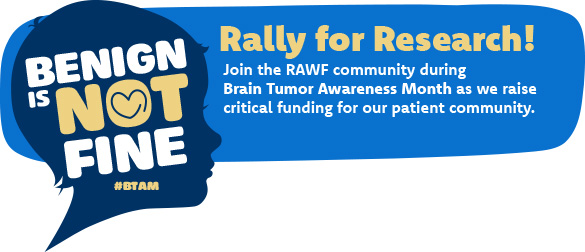
Benign is not fine. And it’s time the world recognized that.
You can help make that possible by joining or supporting a fundraising team or making a donation.
To show our gratitude, anyone who fundraises $250 or more will receive a complimentary Benign is Not Fine T-shirt.
The rally has started — and every team, gift, and share helps more people understand why benign is not fine. Join a team or make a gift today.